

In times of economic uncertainty, investors naturally turn to assets that promise stability and enduring value, and few investments have stood the test of time like gold sovereigns. These small yet mighty coins combine the intrinsic value of gold with a rich legacy of being produced to very high standards by the Royal Mint for over two centuries. Their consistent purity (22 carats / 91.67% gold) and exacting weight (7.98g total) reflect meticulous minting precision, making them both a tangible store of value and a collector’s treasure. Investing in gold sovereigns can be a way to preserve wealth, diversify your portfolio, and even own a piece of history itself. In this article, we’ll explore what makes gold sovereigns so special, weigh the pros and cons of investing in them, and reveal practical ways to do so.
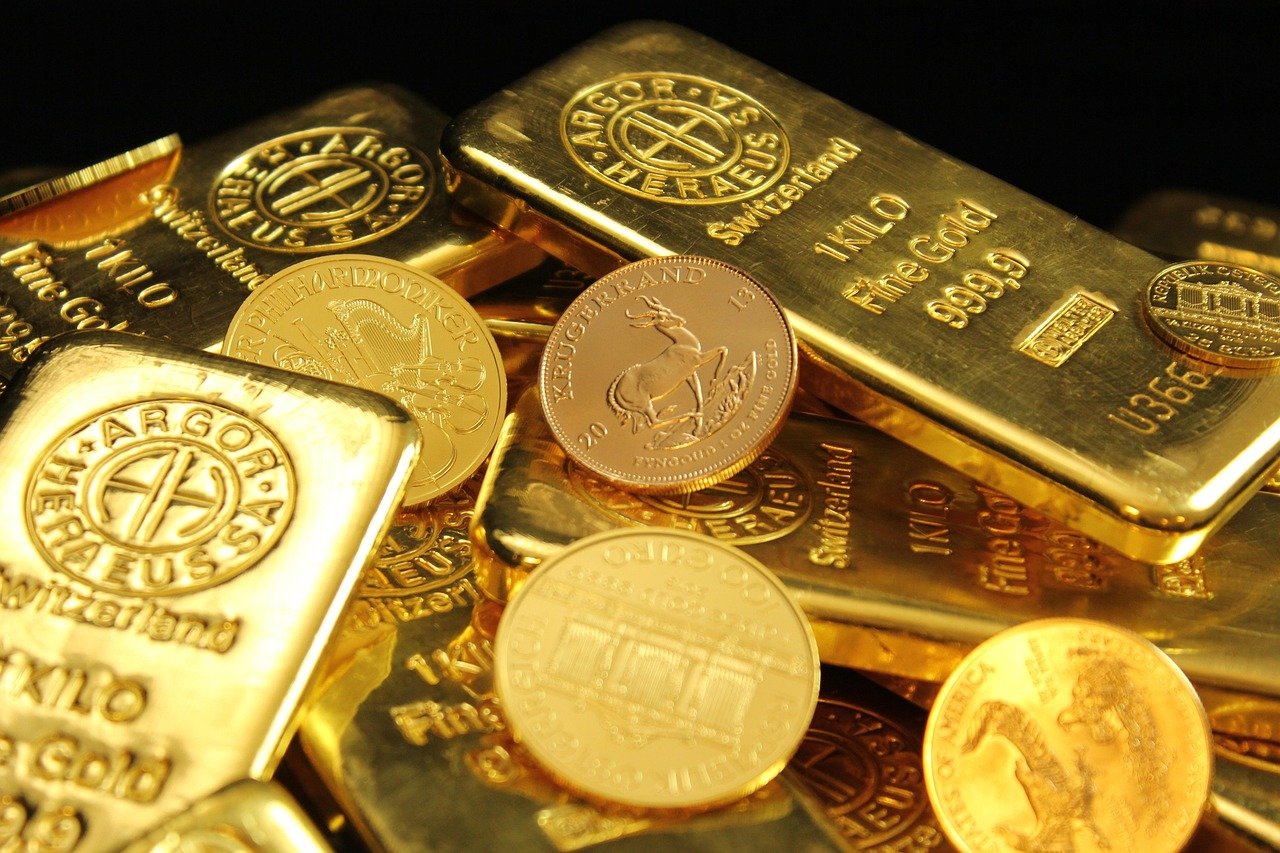
What Are Gold Sovereigns?
Sovereigns are British gold coins first minted by the Royal Mint in 1817, containing just under a quarter of an ounce (7.32 grams) of pure gold. While they were once used as circulating currency, today gold sovereigns are primarily investment-grade coins prized by investors and collectors alike.
As gold sovereigns are legal tender in the U.K., they enjoy exemption from Capital Gains Tax in the country. This is one of their most compelling advantages for British investors. Although this tax advantage is not available in all countries, gold sovereigns are nevertheless recognized internationally for their consistent purity, trusted weight, and historic reputation as one of the world’s most reliable gold coins.
Each gold sovereign is made of 22-carat gold, meaning it’s 91.67% pure gold. The remaining 8.33% is usually copper, sometimes with a small amount of silver, added to make the coin harder and more durable. The total weight of gold sovereigns is 7.98 grams, of which 7.32 grams is pure gold.
Advantages of Investing in Gold Sovereigns
- A proven store of value: Gold has maintained its purchasing power for thousands of years. Investing in gold is a time-tested way to safeguard wealth against inflation, currency fluctuations, and market downturns.
- High liquidity & global recognition: Gold sovereigns are easily tradable across the world thanks to their consistent design, standardised weight, and historical prestige. Dealers and collectors recognise them instantly, meaning they can be sold quickly at fair market value.
- Fractional flexibility: Unlike gold bars, which are often sold in larger denominations, gold sovereigns allow investors to buy smaller amounts of gold. This makes them ideal for incremental investing.
- Aesthetic appeal: Beyond their precious metal content, certain sovereigns have collectible value, especially older or rare issues such as the 1917 London Mint or Victorian coins. For many, this dual appeal as both investment and artefact makes them uniquely satisfying to own.
- A valuable physical asset: Unlike other methods of investing in gold such futures contracts, CFDs, and ETFs (educational explanations below), sovereigns are a way to invest in gold where the investor actually owns the physical gold itself.
- Risk & complexity: Gold sovereigns are a way to own gold in a way that is relatively straightforward. In contrast, gold futures contracts can be complex and involve understanding tick increments, tick values, and if held until expiry, can even require the investor to actually deliver the gold specified in the contract on a certain date. Gold sovereigns on the other hand can be held indefinitely without such risk.
Disadvantages
- Premium prices: Sovereigns typically sell at a premium above the spot price of gold. This can vary depending on the rarity or condition of the coin. As such, gold sovereigns may not be the cheapest form of gold investment.
- Storage and security concerns: Owning physical gold coins means they must be stored safely. Whether investors use a home safe, a bank deposit box, or a private vault, these solutions involve additional costs, and possibly insurance costs too.
- Potential for counterfeits: While being careful to use reputable dealers mitigates this risk, counterfeit coins do exist.
- Limited short-term gains: Gold, including sovereigns, is primarily a long-term hedge rather than a short-term speculative asset. Prices can fluctuate, and returns may not match stocks or other investments, especially during bullish market conditions.
- Liquidity: Although gold sovereigns are widely recognised and can therefore be converted into cash, as a physical asset this will be more challenging and time consuming in practice than other methods of investing in gold which can be traded electronically.
- Import duties & customs requirements: As they are physical items, it’s important to be aware of any potential import duties, taxes, customs regulations and even possible customs delays if shipping or traveling with them internationally. Even when free international shipping is available, buyers can still be responsible for import duties, taxes or customs-fees once the shipment reaches the destination country.

Key terms:
Spot price: This is the price at which gold can be purchased or sold for immediate settlement in global financial markets.
Contracts for Difference (CFDs): These are a type of financial derivative that enables speculation on price movements without actually owning the underlying asset. Your profit (or loss) is based on the difference between the opening and closing price of the trade. In practice, this means you don’t buy the gold itself, you just trade on whether its price will go up or down.
Exchange-Traded Funds (ETFs): Gold ETFs are funds traded on exchanges that mirror the spot price of gold. Investors can buy and sell shares in ETFs throughout the trading day in much the same way as stocks, gaining exposure to the price of gold without actually taking physical possession of it.
Futures contracts: These are standardized agreements also traded on regulated exchanges to buy or sell a set quantity of a commodity at a fixed price on a specific future date. They provide price certainty for producers (especially useful in agriculture, energy, or metals) while also allowing investors to speculate on price moves.
Practical Ways to Invest in Gold Sovereigns
- BullionByPost offers a variety of gold sovereigns, from new King Charles III sovereigns to historical coins dating back to the reign of Queen Victoria in the 19th century. Gold coins from across the world are also available including Australian, Canadian, Persian, Italian, South African, and American gold coins. They also offer international delivery including free, fully insured shipping to the United States.
- Investors can also buy gold sovereigns directly from the official Royal Mint itself, with a long-standing reputation for quality and purity. Even though it’s located in Wales, international shipping is available to many countries outside the U.K. for GBP £12.50 on most orders, and free for bullion orders over £250.
- Chards is a well-established bullion dealer and member of the London Bullion Market Association. International shipping is also available, and they offer a wide selection of coins including historical coins such as the 1903 Edward VII sovereign which was issued by the Perth Mint in Australia.
- The U.S. Mint does not sell its bullion coins directly to the public, but instead only to a short list of companies authorized to purchase precious metals from the U.S. Mint such as APMEX. Their American Gold Eagle coins can also be eligible for Precious Metals IRAs, allowing investors to include them as an inflation hedge as part of their retirement savings.
- Investors in Canada can also avoid import complications by buying the Royal Canadian Mint’s Gold Maple Leaf coin from Border Gold, one of Canada’s leading dealers.
- Australian Gold Capital also offers gold coins to investors in Australia, such as the Kangaroo Minted Coin produced by the Perth Mint. Of course, few symbols represent Australia quite like the iconic Kangaroo!
Conclusion
For those seeking a tangible investment that’s globally recognized and steeped in heritage, gold sovereigns can be an excellent addition to an investment portfolio. Over time, gold sovereigns can offer an elegant hedge against inflation and future economic uncertainty.
In an increasingly digital world, gold sovereigns offer one of the most enduring physical assets: a timeless investment that bridges the past and the future. Whether collected for their historical intrigue or as a safeguard against economic volatility, these coins remain one of the most time-honored ways to physically store wealth which can literally be held for generations to come.
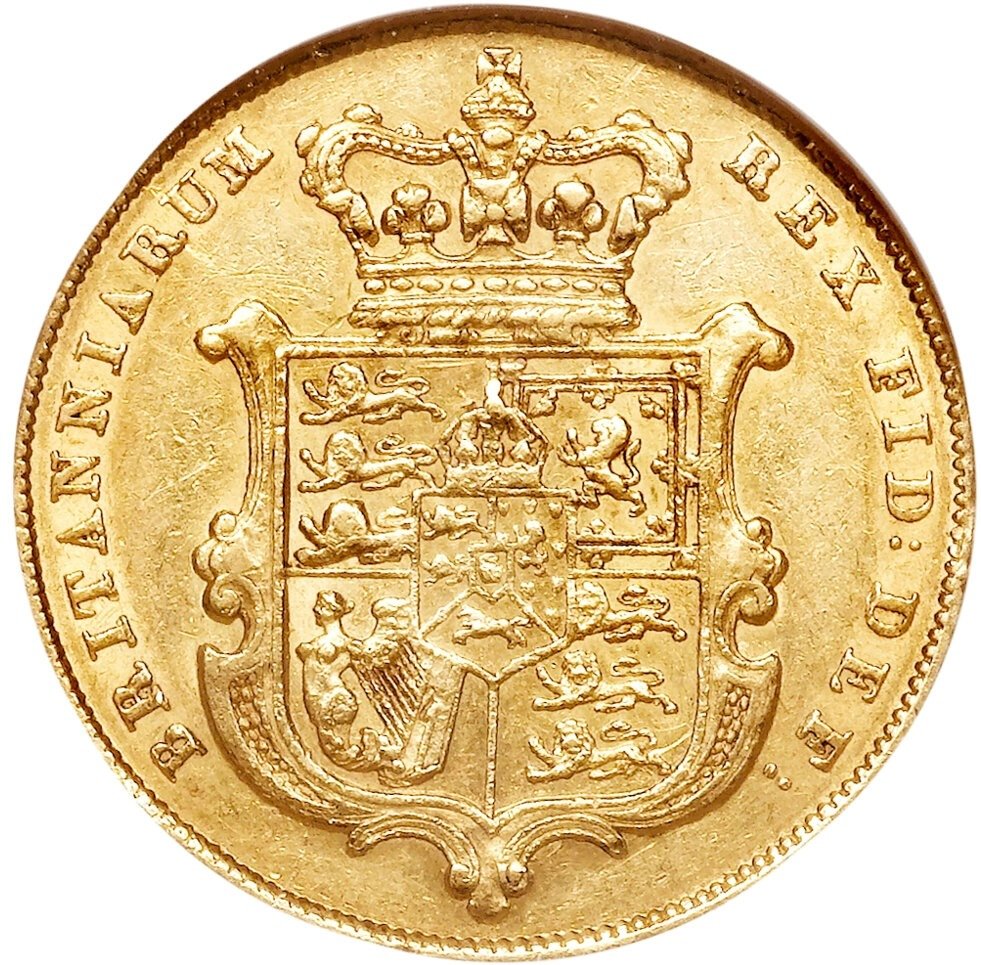
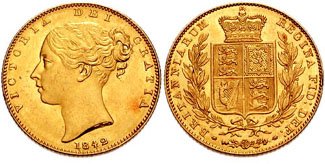
Disclaimer: The purpose of this website is education and financial journalism. It is not a recommendation or personalized financial advice. Your personal circumstances have not been taken into account, and this website is not a substitute for consulting a qualified financial advisor. Past performance is not indicative of future returns. All images are for illustrative purposes only. The image of the 1842 Queen Victoria gold sovereign is used under this license, and the image of Jean Baptiste Merlen’s 1825 design is used under this license (no changes were made to these images and the licensors do not endorse this website).